Four long-form posts on the true landed cost of importing into Nigeria, written from 200+ containers of firsthand experience. Duty rates marked [VERIFY] must be confirmed against the current NCS/CET schedule before publishing.
Primary keyword: cost of importing machinery into Nigeria
The True Cost of Importing Industrial Machinery into Nigeria (2026): Why the Invoice Is Only Half the Story
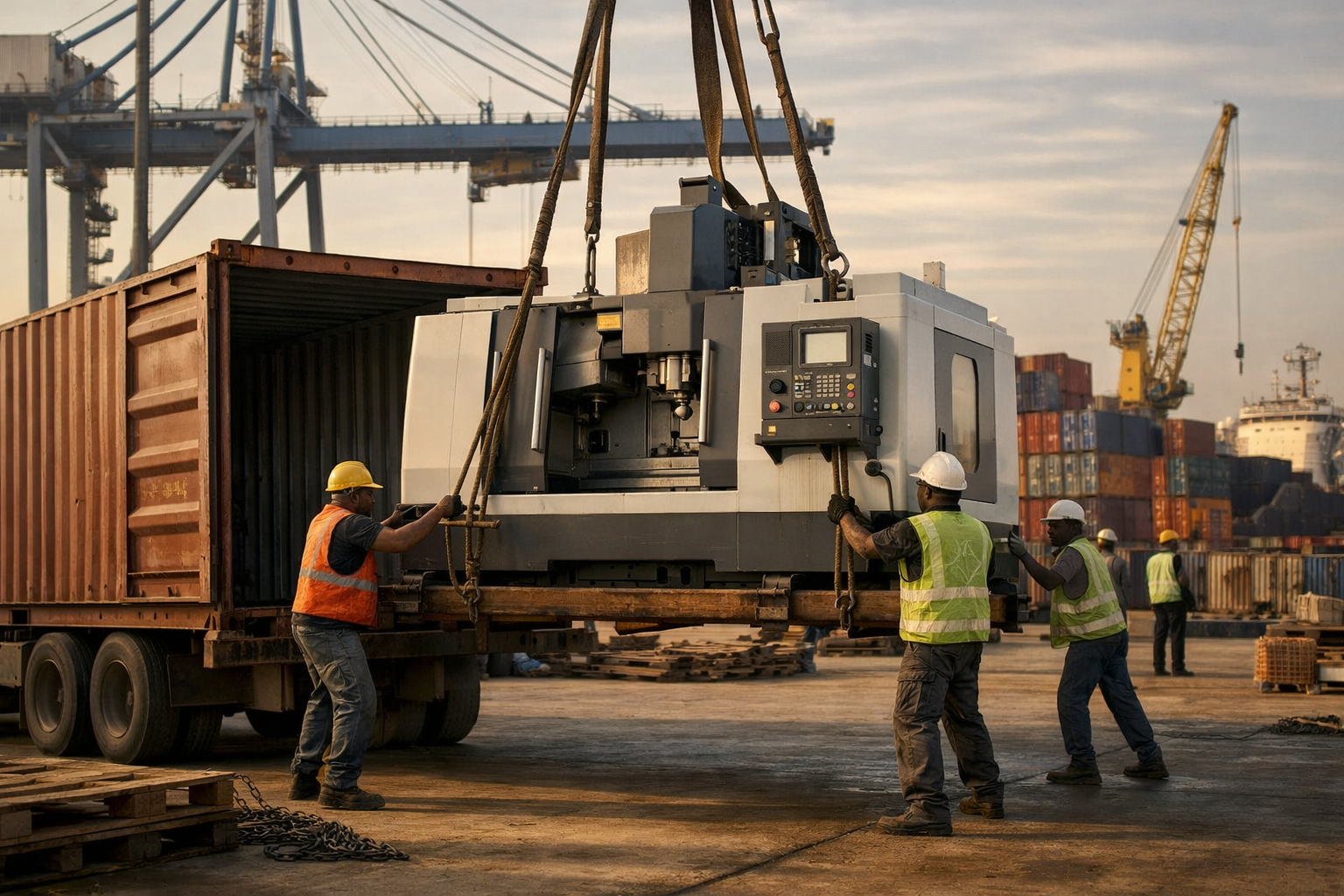
Machinery is the category where importers most often anchor on the wrong number. You negotiate hard on the price of the machine — a CNC mill, a generator, a packaging line — and treat that figure as "the cost." Then the container lands, and the charges you didn't model turn a clean-looking deal into a much tighter one.
In my experience clearing 200+ containers, machinery has a peculiar risk profile: the duty rate is often low, which lulls importers into under-budgeting, while the ancillary charges — port, terminal, handling on heavy freight, clearing — run high precisely because the equipment is bulky and heavy. The invoice is only half the story.
Where machinery classifies
Most industrial machinery sits in HS Chapter 84, and duty typically lands in the 5%–10% range, with some capital-equipment lines attracting 0% concessions [VERIFY — Chapter 84 spans a wide range; confirm the specific rate and any concession for your exact machine against the current CET schedule]. I've used 10% [VERIFY] in the example below as a conservative planning figure.
The full charge stack
Customs Duty (5%–10%) [VERIFY] — often lower than traders expect
Surcharge (CET / port) — % of duty
ETLS (ECOWAS Levy) — 0.5% of CIF
CISS / FCS — ~1%
Import VAT (7.5%)
Port & terminal handling — higher for heavy/bulky machinery
Clearing agent fees
Documentation
Freight & insurance — inside CIF
Worked example: CNC milling machine, $40,000 CIF from China
At ₦1,600/$ (approximate, current at time of writing), assessed at 10% duty [VERIFY]:
Line item
USD
Naira (₦1,600/$)
CIF value
$40,000
₦64,000,000
Customs Duty (10%) [VERIFY]
$4,000
₦6,400,000
Surcharge (7% of duty) [VERIFY]
$280
₦448,000
CISS/FCS (1% CIF)
$400
₦640,000
ETLS / ECOWAS Levy (0.5% CIF)
$200
₦320,000
Import VAT (7.5%)
$3,441
₦5,505,600
Port & terminal handling
$500
₦800,000
Clearing agent fee
$313
₦500,000
Documentation
$50
₦80,000
Total landed cost
≈ $49,184
≈ ₦78,693,600
That's roughly 23% on top of CIF — even at a low 10% duty. The lesson machinery importers learn the expensive way: a small duty rate does not mean a small landed cost. The charges you forgot are the ones that move the deal.
Why you benchmark
Machinery clears less frequently than fast-moving goods, so many traders lean entirely on an agent's number for a shipment they'll only do once or twice a year. That's exactly when an inflated or incomplete quote does the most damage — you have no recent comparison. Building your own itemised estimate first gives you a baseline to check the agent's figure against, before capital moves on a big-ticket item.
This is an estimate. Final cost depends on the applicable HS code classification, customs valuation, prevailing exchange rate, and official NCS assessment.
Calculate your own estimate at getimportcost.com — model your machine's full landed cost before you sign the proforma.
Secondary keywords: import duty on machinery Nigeria · HS Chapter 84 duty rate · landed cost calculator Nigeria · Meta description: What does it really cost to import industrial machinery into Nigeria in 2026? A full landed-cost breakdown — duty, VAT, levies, port and clearing — with a worked CNC-mill example.
Primary keyword: cost of importing electronics into Nigeria
The Real Landed Cost of Importing Smartphones & Electronics into Nigeria (2026): Per-Unit Margin Is Won or Lost Here
Electronics is a per-unit business. You're not pricing a container — you're pricing a phone, a laptop, a smart TV, against a market that already knows roughly what it should cost. That's what makes the true landed cost of importing electronics into Nigeria so decisive: a small error on the container becomes a per-unit error multiplied across every device, and it's the difference between a healthy margin and selling at a loss you didn't see coming.
In my experience clearing 200+ containers, electronics importers get caught by two things: a duty rate on the higher end, and a customs valuation that may not match the price you actually paid.
Where electronics classify
Consumer electronics generally sit in HS Chapter 85, with duty commonly around 20%, though certain ICT lines attract concessions [VERIFY — confirm the exact rate for your product's HS code; some ICT/telecom equipment qualifies for reduced rates]. I've used 20% [VERIFY] below.
The full charge stack
Customs Duty (~20%) [VERIFY]
Surcharge (CET / port) — % of duty
ETLS (ECOWAS Levy) — 0.5% of CIF
CISS / FCS — ~1%
Import VAT (7.5%)
Port & terminal handling
Clearing agent fees
Documentation
Freight & insurance — inside CIF
Worked example: smartphones, $25,000 CIF from China
At ₦1,600/$ (approximate, current at time of writing), assessed at 20% duty [VERIFY]:
Line item
USD
Naira (₦1,600/$)
CIF value
$25,000
₦40,000,000
Customs Duty (20%) [VERIFY]
$5,000
₦8,000,000
Surcharge (7% of duty) [VERIFY]
$350
₦560,000
CISS/FCS (1% CIF)
$250
₦400,000
ETLS / ECOWAS Levy (0.5% CIF)
$125
₦200,000
Import VAT (7.5%)
$2,305
₦3,688,000
Port & terminal handling
$313
₦500,000
Clearing agent fee
$250
₦400,000
Documentation
$50
₦80,000
Total landed cost
≈ $33,643
≈ ₦53,828,000
That's about 35% on top of CIF. Divide it across your unit count and that's your true cost per device — the number you must price above, not the invoice price. Import a thousand handsets and a 35% uplift you didn't model is the whole margin.
The valuation trap — and why you benchmark
Electronics are a category where customs may assess on a reference value rather than your invoice. If your agent quotes you off an optimistic valuation and customs assesses higher, you absorb the difference — usually after the goods are already at the port racking up storage.
The defence is simple: know your own number before you ask anyone else's. When you can see the full breakdown yourself, an agent's quote stops being a leap of faith and becomes something you can check.
This is an estimate. Final cost depends on the applicable HS code classification, customs valuation, prevailing exchange rate, and official NCS assessment.
Calculate your own estimate at getimportcost.com — enter your shipment and get the true per-unit landed cost before you price a single device.
Secondary keywords: import duty on phones Nigeria · electronics customs clearing Nigeria · per-unit landed cost · Meta description: The real per-unit cost of importing smartphones and electronics into Nigeria in 2026 — duty, VAT, levies and the customs-valuation trap, with a worked example.
Primary keyword: cost of clearing spare parts in Nigeria
The Cost of Clearing Spare Parts in Nigeria (2026): Where Repeat Importers Quietly Lose Margin
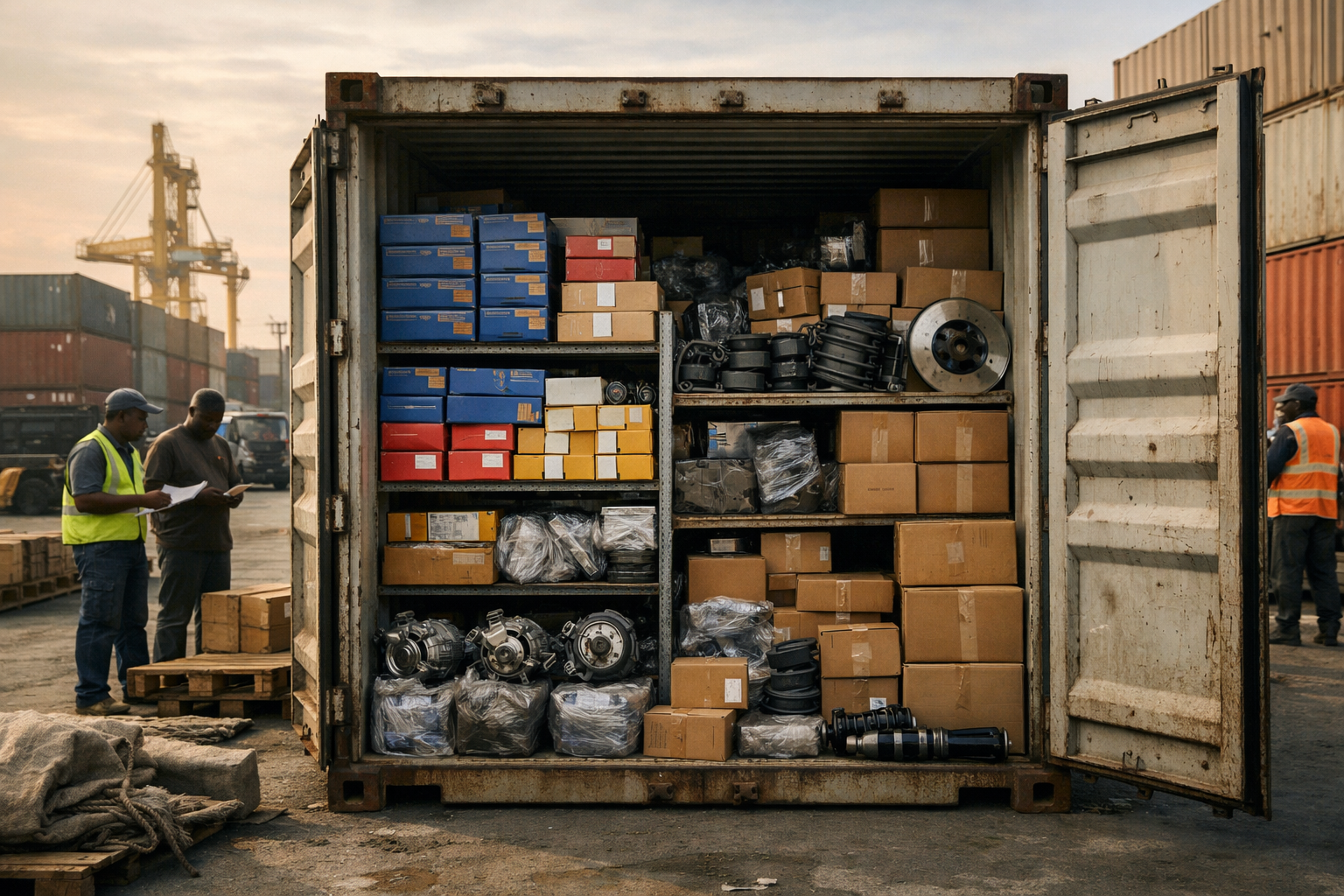
Spare parts is a volume game. You're not clearing one container a year — you're clearing them again and again, filters and brake pads and alternators, restocking as fast as they sell. And that's exactly what makes the cost of clearing spare parts in Nigeria so dangerous to guess at: a small error per container, repeated across a year of imports, doesn't cost you once. It costs you every single time.
In my experience clearing 200+ containers, the spare-parts trader who nails the landed cost on every shipment wins on margin without ever raising a price. The one who guesses loses it quietly — a little here, a little there, never enough to trigger alarm, but adding up to real money by year end.
The mixed-container trap
Here's the thing about spare parts that catches even seasoned importers: your container is mixed. Filters, brake pads, alternators, gaskets — different items, potentially different HS codes, potentially different duty rates.
Automotive parts under HS Chapter 87 typically attract duty somewhere in the 20%–35% range depending on the exact classification [VERIFY — Chapter 87 parts vary widely; confirm the specific rate for each part category against the current CET schedule]. The danger is this: when a container holds mixed items, customs can assess the whole consignment at the highest applicable rate among them. You budgeted for an average of 20%; one line of parts pulls the assessment to 35%, and suddenly your whole container is dearer than you planned.
The full charge stack
Customs Duty (20%–35%) [VERIFY] — and beware the mixed-container effect
Surcharge (CET / port) — % of duty
ETLS (ECOWAS Levy) — 0.5% of CIF
CISS / FCS — ~1%
Import VAT (7.5%)
Port & terminal handling
Clearing agent fees
Documentation
Freight & insurance — inside CIF
Worked example: mixed auto parts, $20,000 CIF from Dubai (UAE)
At ₦1,600/$ (approximate, current at time of writing), assessed at 20% duty [VERIFY]:
Line item
USD
Naira (₦1,600/$)
CIF value
$20,000
₦32,000,000
Customs Duty (20%) [VERIFY]
$4,000
₦6,400,000
Surcharge (7% of duty) [VERIFY]
$280
₦448,000
CISS/FCS (1% CIF)
$200
₦320,000
ETLS / ECOWAS Levy (0.5% CIF)
$100
₦160,000
Import VAT (7.5%)
$1,844
₦2,950,400
Port & terminal handling
$313
₦500,000
Clearing agent fee
$219
₦350,000
Documentation
$44
₦70,000
Total landed cost
≈ $26,999
≈ ₦43,200,000
That's ~35% on top of CIF at the 20% rate. Now watch what the mixed-container trap does. If customs assesses the whole consignment at 35% because one part line classifies higher:
Duty jumps from $4,000 to $7,000
With the knock-on surcharge and VAT, your government charges rise by ~$3,450
Total landed cost climbs to ≈ $30,449 (₦48,718,400)
Same container. Same invoice. $3,450 difference — purely from how the mix gets classified. On a repeat-import business, that's the gap between winning and losing your category.
Why you benchmark, not trust
Your agent clears parts constantly and probably knows the codes well. But "probably" isn't a margin strategy. On repeat imports especially, you want to know your expected landed cost before every shipment, so you can spot the container where the assessment comes back unusually high and ask why — before you pay it. Benchmarking your agent isn't distrust. It's how professionals protect a thin, repeatable margin.
This is an estimate. Final cost depends on the applicable HS code classification, customs valuation, prevailing exchange rate, and official NCS assessment.
Calculate your own estimate at getimportcost.com — model your parts container before it ships and know your true cost per restock, every time.
Secondary keywords: auto parts customs duty Nigeria · HS Chapter 87 · mixed container assessment · Meta description: What it really costs to clear automotive spare parts in Nigeria in 2026 — and the mixed-container trap that quietly erodes repeat importers' margins.
Primary keyword: import duty on chemicals into Nigeria
Import Duty on Chemicals into Nigeria (2026): The Regulatory Costs Most Articles Ignore
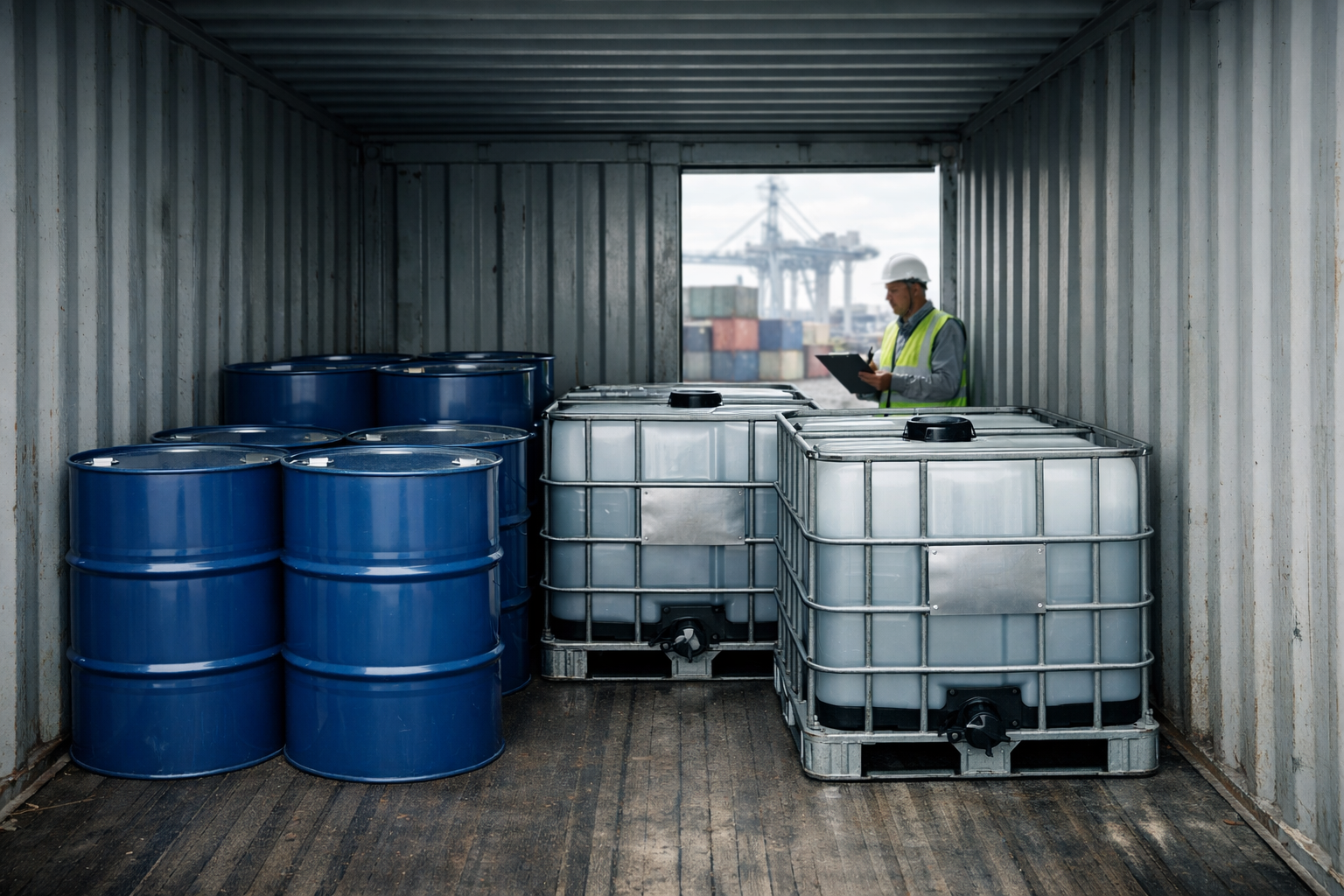
You'll read plenty of articles about the import duty on chemicals into Nigeria that stop at the customs rate. They'll tell you the duty percentage, do a bit of arithmetic, and call it a landed cost. Then you actually try to clear a container of chemicals — and discover that duty was never your biggest problem. NAFDAC and SON were.
In my experience clearing 200+ containers, chemicals are the category where the regulatory cost — permits, certifications, and the clearance delays they cause — can rival the customs charges themselves. Miss them in your budget and you don't just overspend. You leave a container sitting at the port accruing demurrage while you scramble for a permit you should have had before it shipped.
Duty is the easy part
Industrial and cleaning chemicals classify across HS Chapters 28, 29 or 34 depending on exactly what they are, and duty rates swing widely — anywhere from 0% to 20% [VERIFY — chemical duty rates are genuinely spread across this range by classification; confirm the specific rate for your product's HS code, as this is the single most variable category in this series]. Bulk industrial cleaning preparations often sit around Chapter 34 at a 20% rate [VERIFY], which is what I've used below. But a raw industrial input under Chapter 28/29 might be far lower. Classification is everything here.
The charge stack — plus the lines nobody warns you about
Standard customs charges:
Customs Duty (0%–20%) [VERIFY]
Surcharge (CET / port) — % of duty
ETLS (ECOWAS Levy) — 0.5% of CIF
CISS / FCS — ~1%
Import VAT (7.5%)
Port & terminal handling
Clearing agent fees
Documentation
And the regulatory lines that make chemicals different:
NAFDAC — permits, product registration and endorsement for regulated chemical products [VERIFY — cost varies by product and registration status]
SONCAP (SON) — Standards Organisation of Nigeria conformity certificate, required for many regulated products [VERIFY — SONCAP cost depends on product category]
Clearance time — both add days-to-weeks, and time at the port is money (storage and demurrage)
Worked example: industrial cleaning chemicals, $30,000 CIF from Germany (20ft container)
At ₦1,600/$ (approximate, current at time of writing), 20% duty [VERIFY]:
Line item
USD
Naira (₦1,600/$)
CIF value
$30,000
₦48,000,000
Customs Duty (20%) [VERIFY]
$6,000
₦9,600,000
Surcharge (7% of duty) [VERIFY]
$420
₦672,000
CISS/FCS (1% CIF)
$300
₦480,000
ETLS / ECOWAS Levy (0.5% CIF)
$150
₦240,000
Import VAT (7.5%)
$2,765
₦4,424,000
Port & terminal handling
$313
₦500,000
Clearing agent fee
$281
₦450,000
Documentation
$50
₦80,000
NAFDAC / SONCAP regulatory [VERIFY]
$375
₦600,000
Total landed cost
≈ $40,654
≈ ₦65,046,400
That's ~35% on top of CIF — and notice the regulatory line sitting right there in the total, a cost the "just duty" articles never show you. But the number on the page understates the real risk, because the bigger regulatory cost is time. A chemical container held for a missing NAFDAC endorsement doesn't just cost the permit fee; it costs every day of storage and demurrage until you produce it. I've seen that turn a healthy margin upside down on an otherwise routine import.
Why the benchmark matters more here
With chemicals, your agent's verbal quote is even less reliable as a full picture — because agents quote the customs clearance, and the regulatory pathway is often a separate conversation. You need one view that includes both. Building your own itemised estimate — duty stack and the regulatory reality — is how you avoid the two classic chemical-import mistakes: budgeting only for duty, and shipping before your permits are in order.
This is an estimate. Final cost depends on the applicable HS code classification, customs valuation, prevailing exchange rate, and official NCS assessment.
Calculate your own estimate at getimportcost.com — describe your chemical import in plain language and get the full landed cost picture before you commit capital or book freight.
Secondary keywords: NAFDAC SONCAP import cost · chemical customs clearing Nigeria · HS Chapter 28 29 34 · Meta description: The import duty on chemicals into Nigeria in 2026 is only part of the story — NAFDAC, SONCAP and clearance delays are the costs most articles ignore.
Pre-publish [VERIFY] checklist
Confirm each duty rate against the current NCS / CET schedule before publishing. Every figure below is a conservative planning estimate, not a confirmed rate.
Post
Duty rate used
Confidence
Verify vs NCS/CET
#2 Machinery (CNC mill, Ch. 84)
10%
Medium — range 5–10%, some 0% concessions
Required
#3 Electronics (smartphones, Ch. 85)
20%
Medium-high — some ICT concessions exist
Required
#4 Spare parts (auto, Ch. 87)
20% (35% shown as mixed-container case)
Low-medium — genuinely spread 20–35%
Required ×2
#5 Chemicals (Ch. 28/29/34)
20%
Low — widest spread of all, 0–20%
Required ×2
Also confirm across all four: the 7% surcharge and 1% CISS figures, the 7.5% VAT, and your local port / terminal / agent charge estimates (set conservatively — you'll know these better than any published figure).
 Primary keyword: cost of importing machinery into Nigeria